

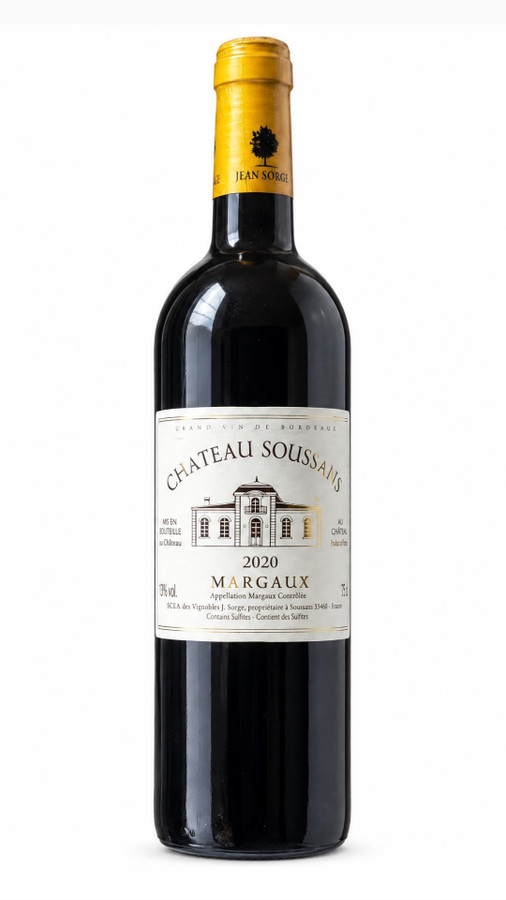
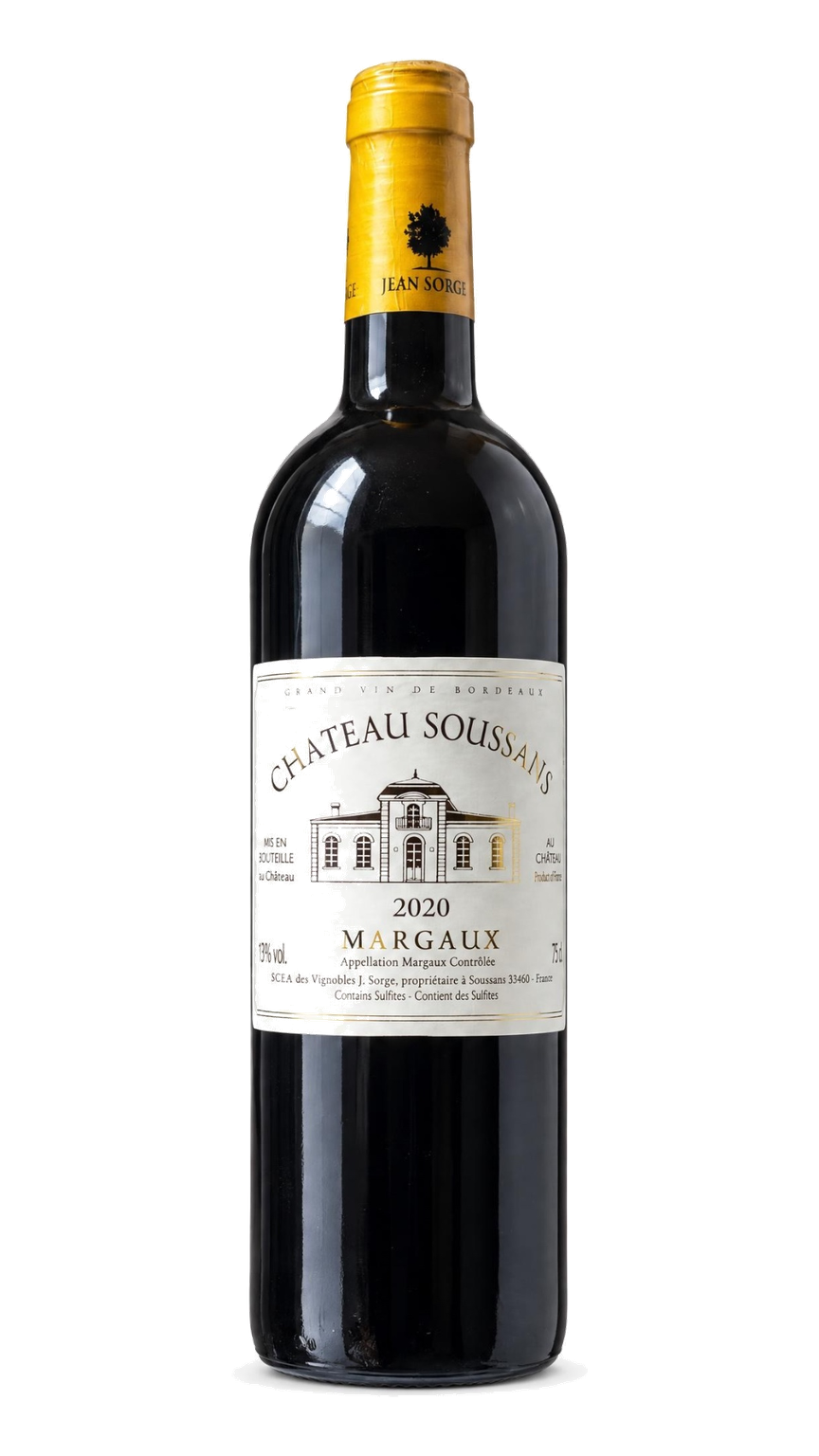
2020 Chateau Soussans, Margaux

The market on this bottle
Wine-Searcher tracks this 2020 Chateau Soussans, Margaux, France across the open market. Their published U.S. low is $33.38 and the average is $41.39. Our slash is $33.00.
Sorge family • Margaux • 2020
2020 Chateau Soussans, Margaux
The younger brother of Chateau Deyrem-Valentin.
The estate calls Chateau Soussans the elegant and subtle younger brother of Chateau Deyrem-Valentin, the second wine from the same cellar in Marsac. On a Left Bank where Cabernet leads the blend, this vineyard is planted 50% Cabernet Sauvignon and 50% Merlot. The bottle is $33.
against the $65 compare
The first wine is Deyrem-Valentin
In 1928 Maurice Blanc, grandfather of Jean Sorge, bought Chateau Deyrem-Valentin at auction and kept some of the oldest Cabernet Sauvignon and Merlot vines in Margaux. The estate still calls that bottle the fleshy, floral Margaux, and it calls Soussans its elegant and subtle younger brother, the one with the soft tannin. Jean owns the house with his daughters. Christelle runs the cellar. Sylvie runs the office. APS Wine & Spirits, who brings the family in, says all three wines are made in the cellars of Deyrem.
Cocks and Féret set that first wine in Marsac, in the heart of the Margaux appellation, with Lascombes, Malescot-Saint-Exupéry, the two Labégorces, and La Tour de Mons for neighbors. APS calls Deyrem-Valentin one of the typical Margaux crus, promoted to Cru Bourgeois Supérieur in 2020, and quotes the Revue du Vin de France on the delicious balance of its wines. The property dates to 1730. The name belongs to the man who represented Soussans at the Margaux council in 1792. Soussans is the two-hectare plot inside that same ground. The vines are younger than the oldest Deyrem plantings, and they are not young. APS puts them at 30 years and older, farmed organically like the first wine, with Ecocert approval aimed at 2025. Trade notes also list an HVE3 mark for the farming.
On the Left Bank, Cabernet usually writes the blend. This second wine does not follow that habit. It is 50% Cabernet Sauvignon and 50% Merlot, so Merlot has the same voice as the grape that is supposed to dominate. If the first wine is the one Féret measured against Lascombes, what is left for the younger brother to say?
Ruby, jam, and a savory line
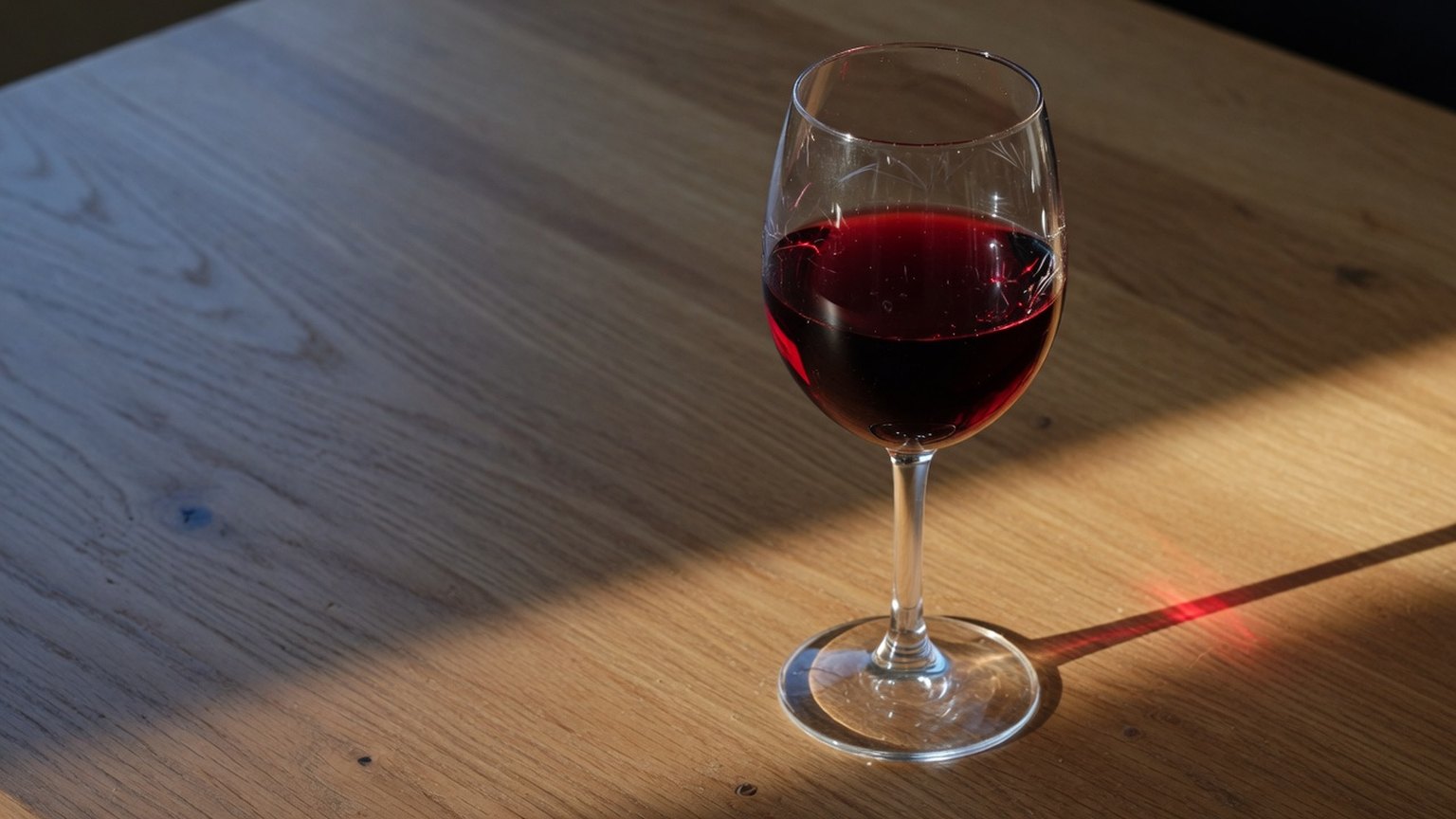
The technical note on this 2020 starts with a ruby color and a deep concentration. The nose is fresh red fruit, perfumed strawberry jam, and raspberry, with pink peppercorn underneath and a faint charcoal. APS tastes the same vintage as a plush glass, a lip-gloss of black currant and raspberry, the same pink peppercorn, and a savory charcoal.
On the palate the technical note is supple and juicy. Ripe plum and a little cream sit with silky tannins, a structural acidity, and a finish that stays on lively red fruit. That note lists 14.5% alcohol. The even planting is why the glass stays perfumed. Cabernet is still half the wine, which is a serious share of Cabernet for a bottle this soft, and the Merlot keeps it from pretending to be a heavier classed growth.
The same cement as the first wine
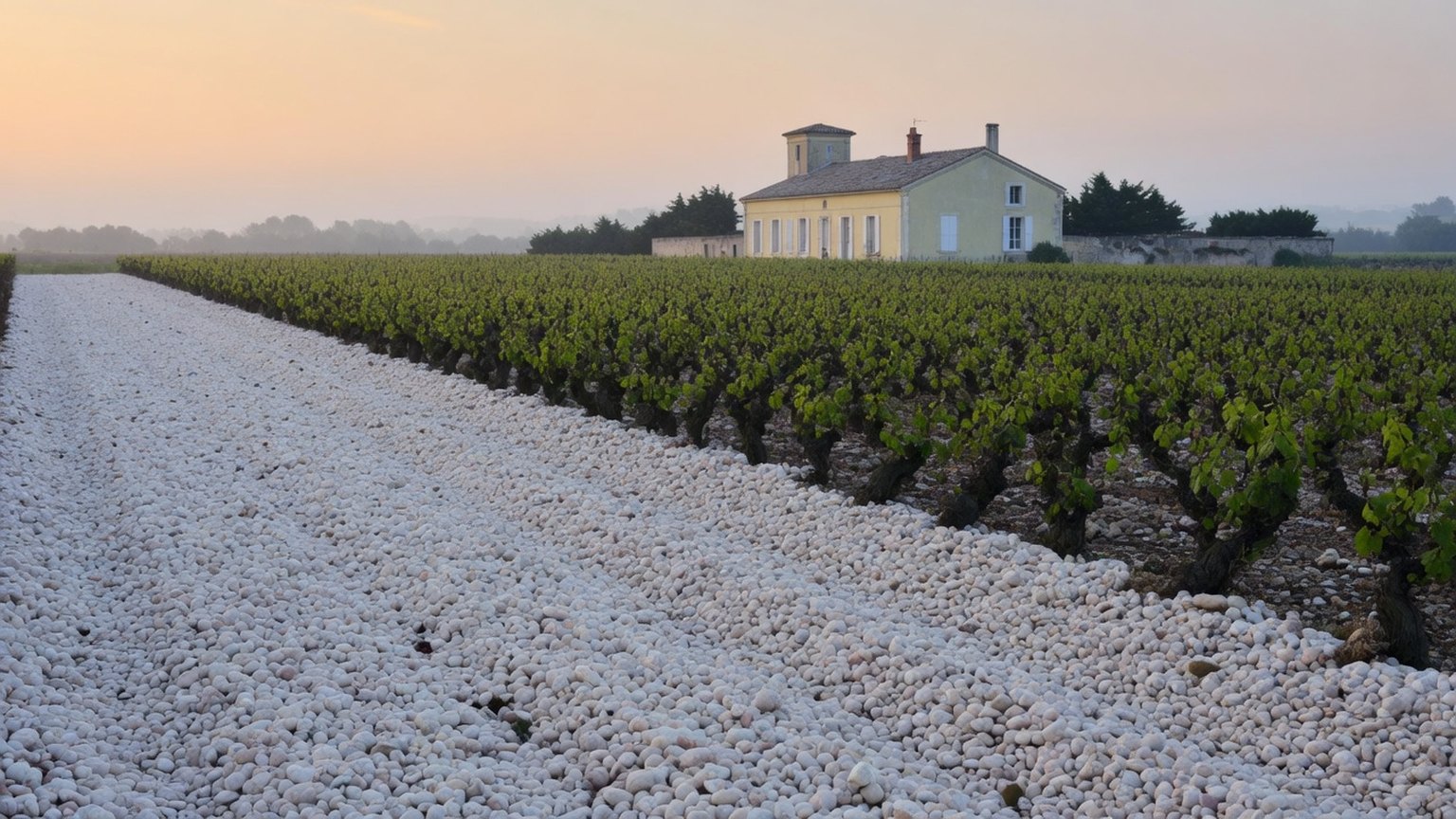
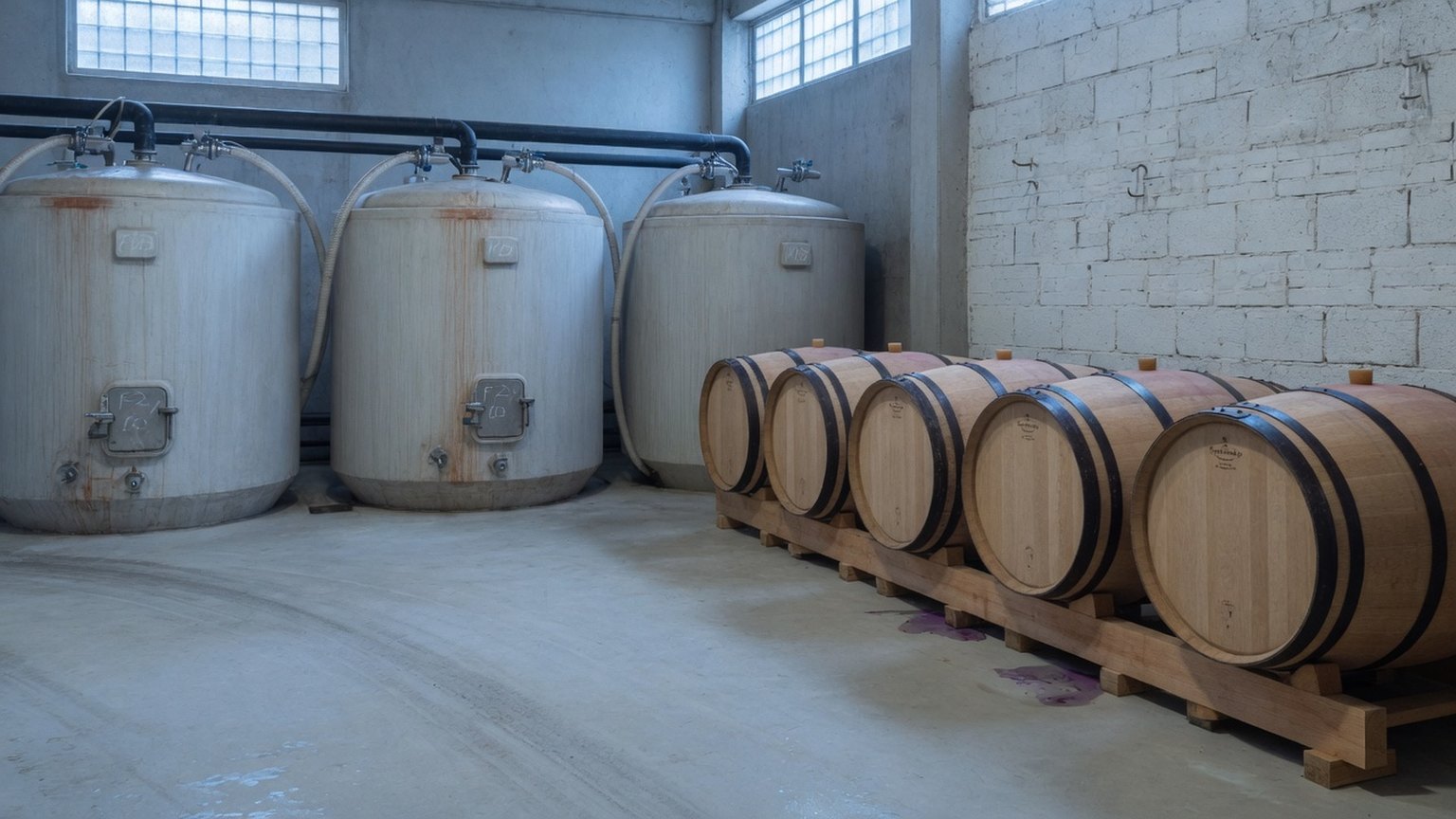
The fruit is picked by hand and sorted twice, once in the vineyard and again in the cellar, the same routine APS describes for Deyrem-Valentin. A cold maceration comes before fermentation in thermally stable concrete vats, and the estate says each plot is vinified on its own. The trade sheet plants the vineyard at 10,000 vines to the hectare, in deep gravel over sand and clay, the pebble ground of Soussans.
Elevage runs 12 to 15 months in French oak. Christelle's house rule, the one APS prints for the domaine, is that new oak never exceeds one third, and this 2020 stays inside it. The wine is fined with egg whites and bottled unfiltered. The first wine lives by that same ceiling. The younger brother is not a looser version of the cellar. It is the same hands, on the two hectares inside the property.
Christelle, at home in Marsac
Christelle was born at Deyrem-Valentin. The estate says that in 1999, when she came home, Jean entrusted her with the winemaking and gave Sylvie the office. APS dates the passing of his duties to 2002. She is one of the few women heading a family domaine of this rank in Bordeaux. She worked a vintage in Australia and staged at three classified first growths, and the importer says she will not name them. In 2017 the family brought Hubert de Bouard Consulting into the cellar.
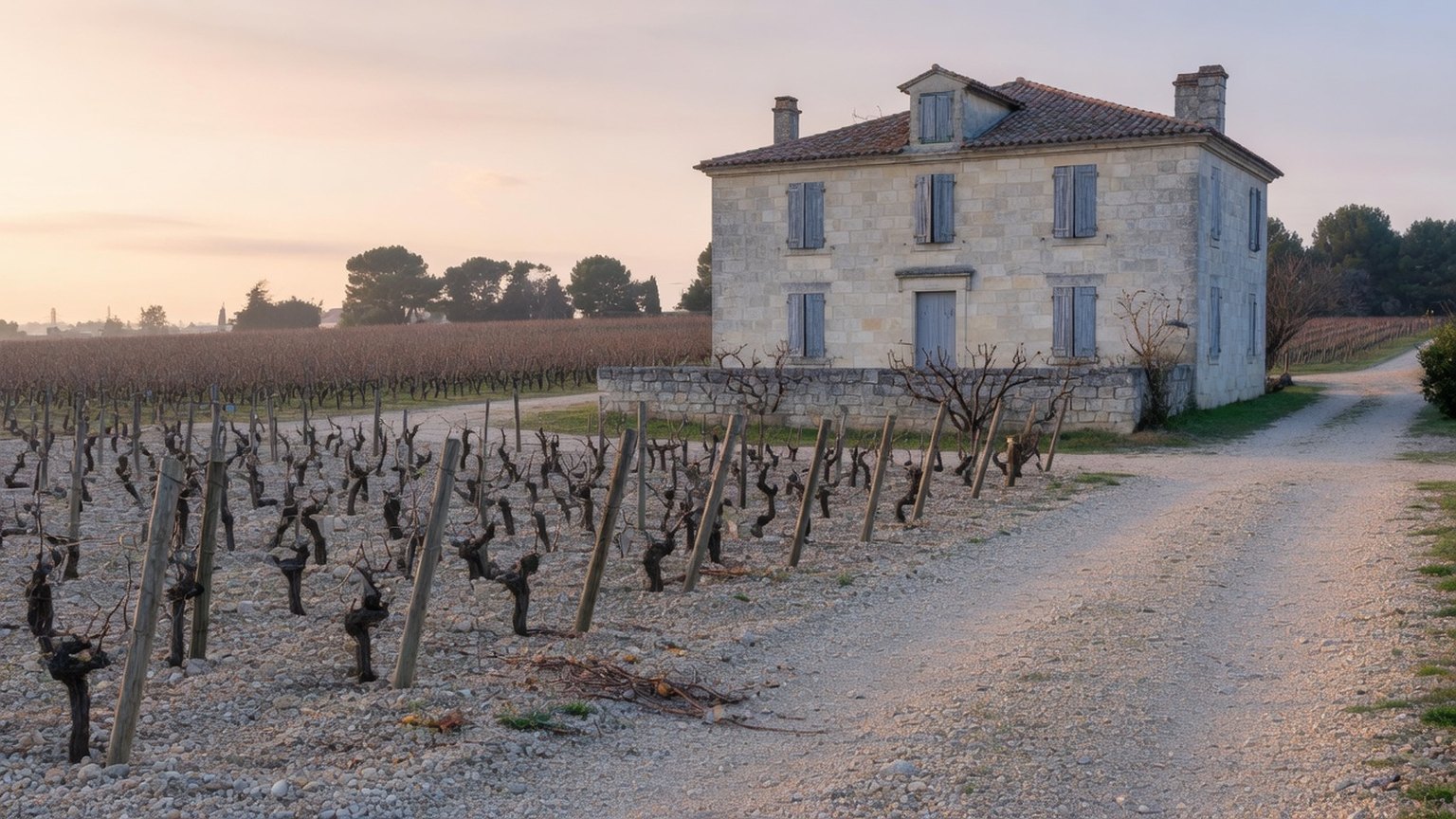
The words APS heard from her are balance and restraint. She wants the wines très classique, quieter than the loud Bordeaux she does not like. The ground under both Margaux wines is the gravel of Soussans, the commune beside Lascombes, Labégorce, and Margaux, where classified estates, including Chateau Margaux, also keep vines. The cellar is in Marsac, and that is where this bottle is made.
Chateau Valentin is the third wine, a Haut-Médoc from Avensan, west of Margaux, on the ground where her grandfather was born. It is not this bottle, and it is not the first wine. The first wine is Deyrem-Valentin. Soussans is the younger brother standing next to it.
Duck. Cassoulet.
The technical note sends this Margaux to red meat, the grill, lamb, and game. Duck is the plate that meets the raspberry and the strawberry jam. Cassoulet is the pot that meets a second wine you can open without waiting on a classed growth.
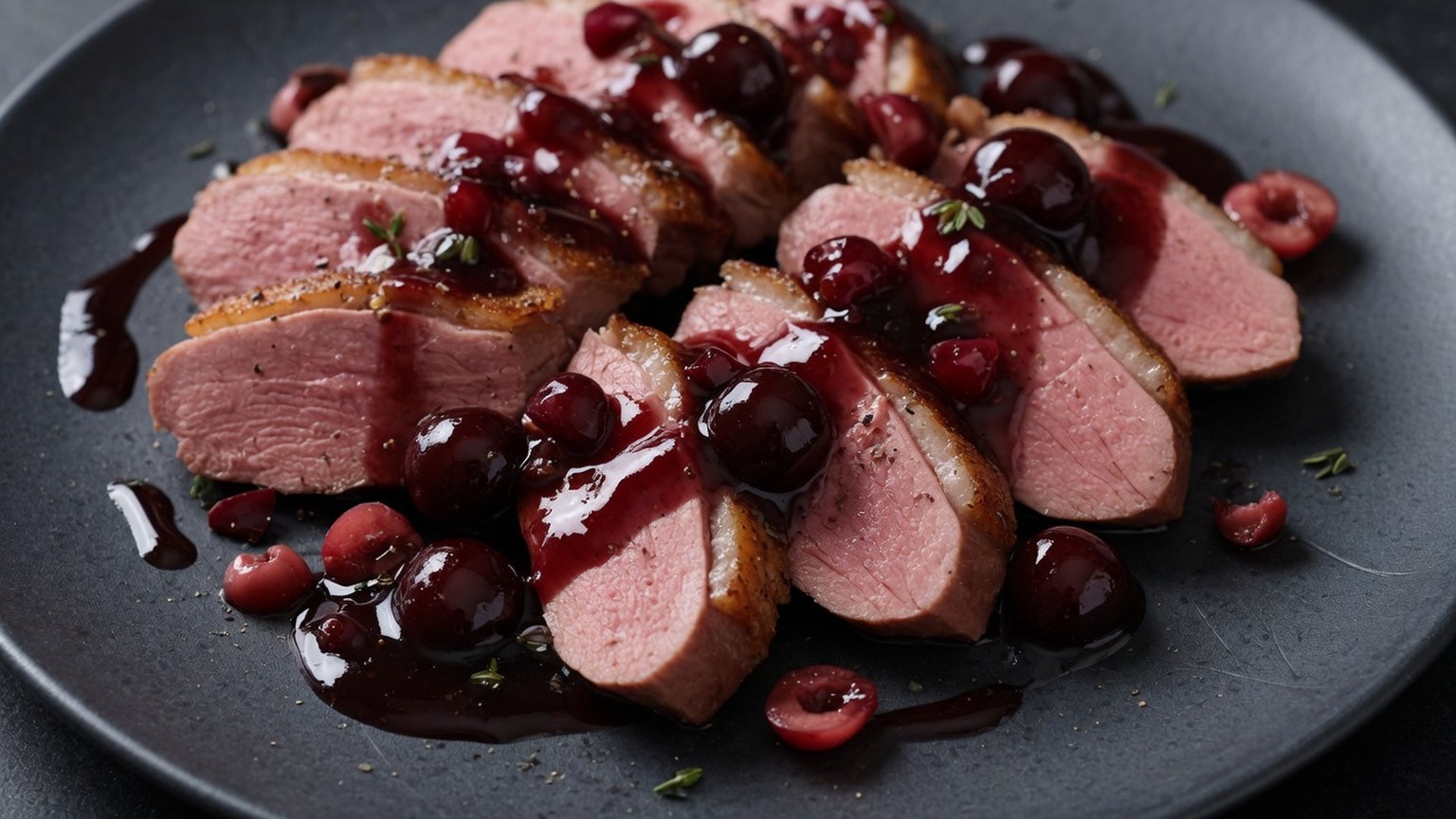
Score the duck skin, then finish it with cherry and port, and the charcoal in the glass has somewhere to go. A long cassoulet gives the silky tannin something rich to lean on. Both plates suit a younger brother that was built to be poured.
Duck with cherries
Seared breast, a cherry and port glaze.
Why it works: The red fruit in the sauce meets the jam and raspberry in the glass.
View Recipe for seared duck breast with cherries and port (opens in a new tab)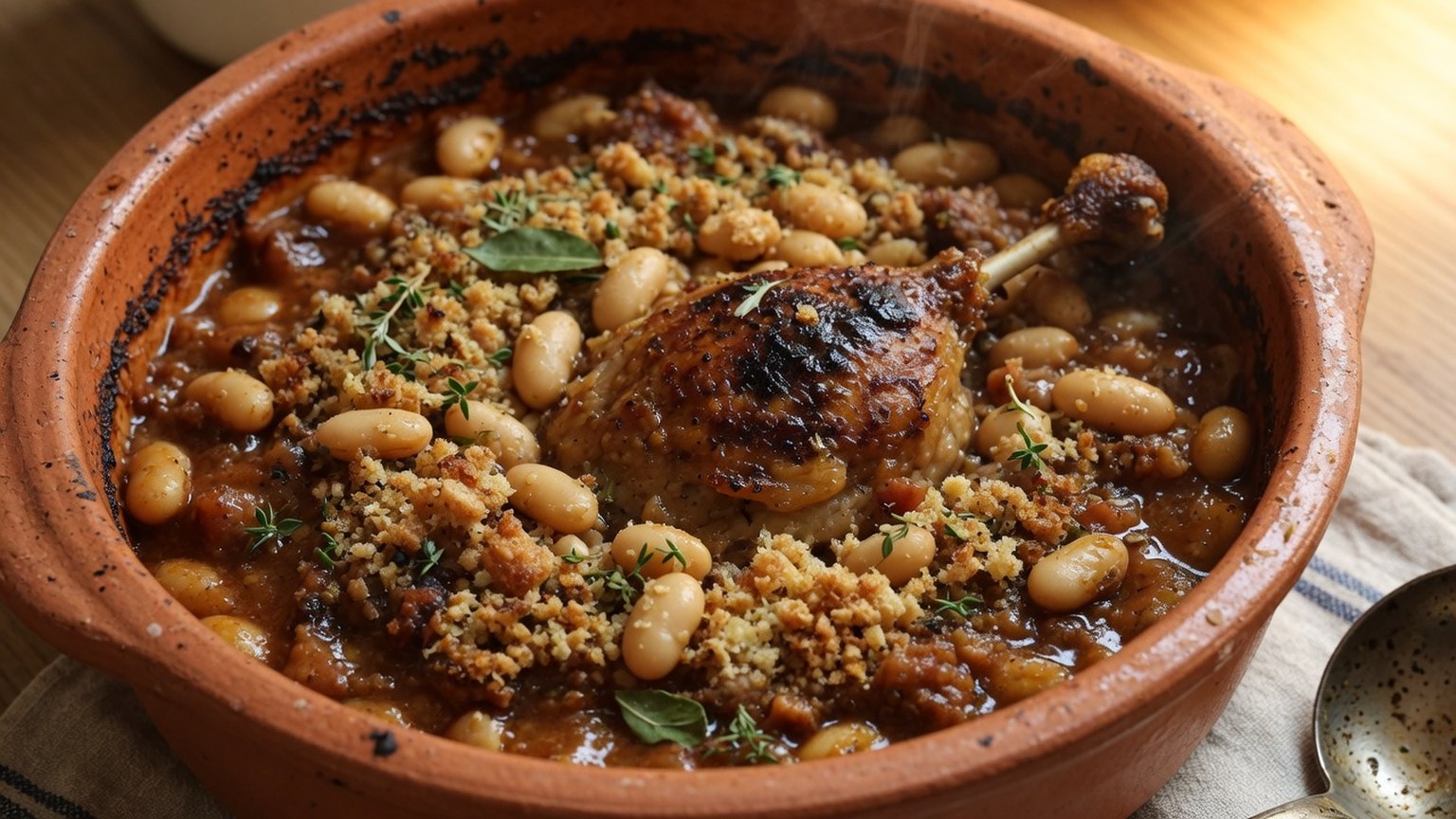
Cassoulet
Beans, duck, a clay pot.
Why it works: A long pot gives the soft tannin something rich to lean on.
View Recipe for traditional French cassoulet (opens in a new tab)Add the younger brother.
The second wine of Deyrem-Valentin. Half Cabernet Sauvignon, half Merlot.
The bottle is $33. Add it.
