

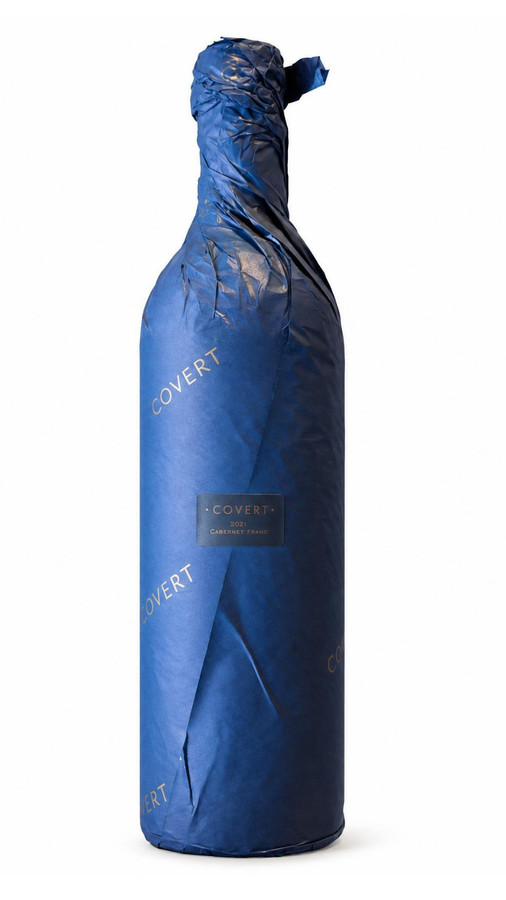
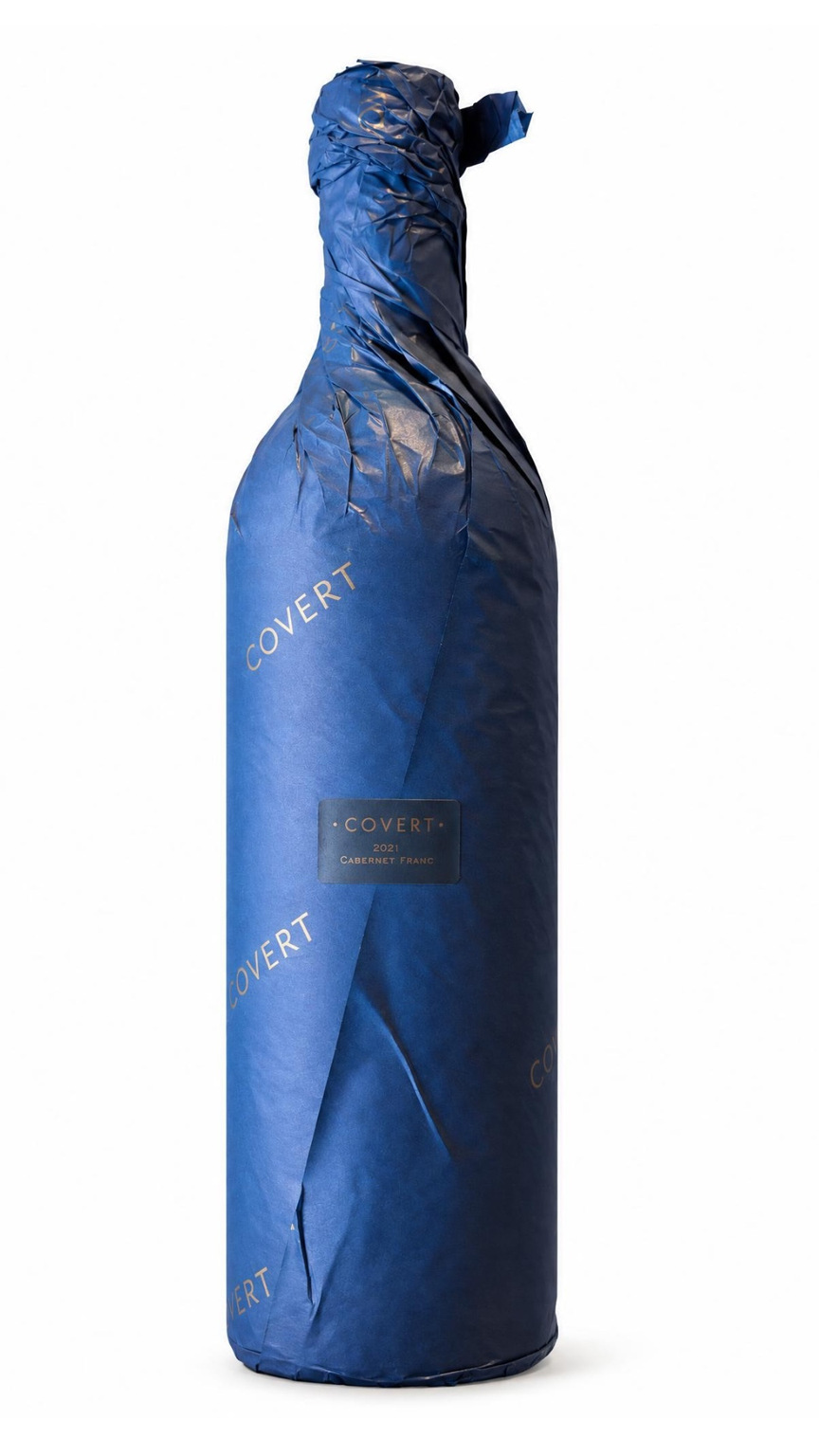
2021 Covert Estate Cabernet Franc, Coombsville, USA

The market on this bottle
Wine-Searcher tracks this 2021 Covert Estate Cabernet Franc, Coombsville across the open market. Their published U.S. low is $125.29 and the average is $253.22. Our slash is $125.00.
Covert Estate
2021 Covert Estate Cabernet Franc, Coombsville, USA
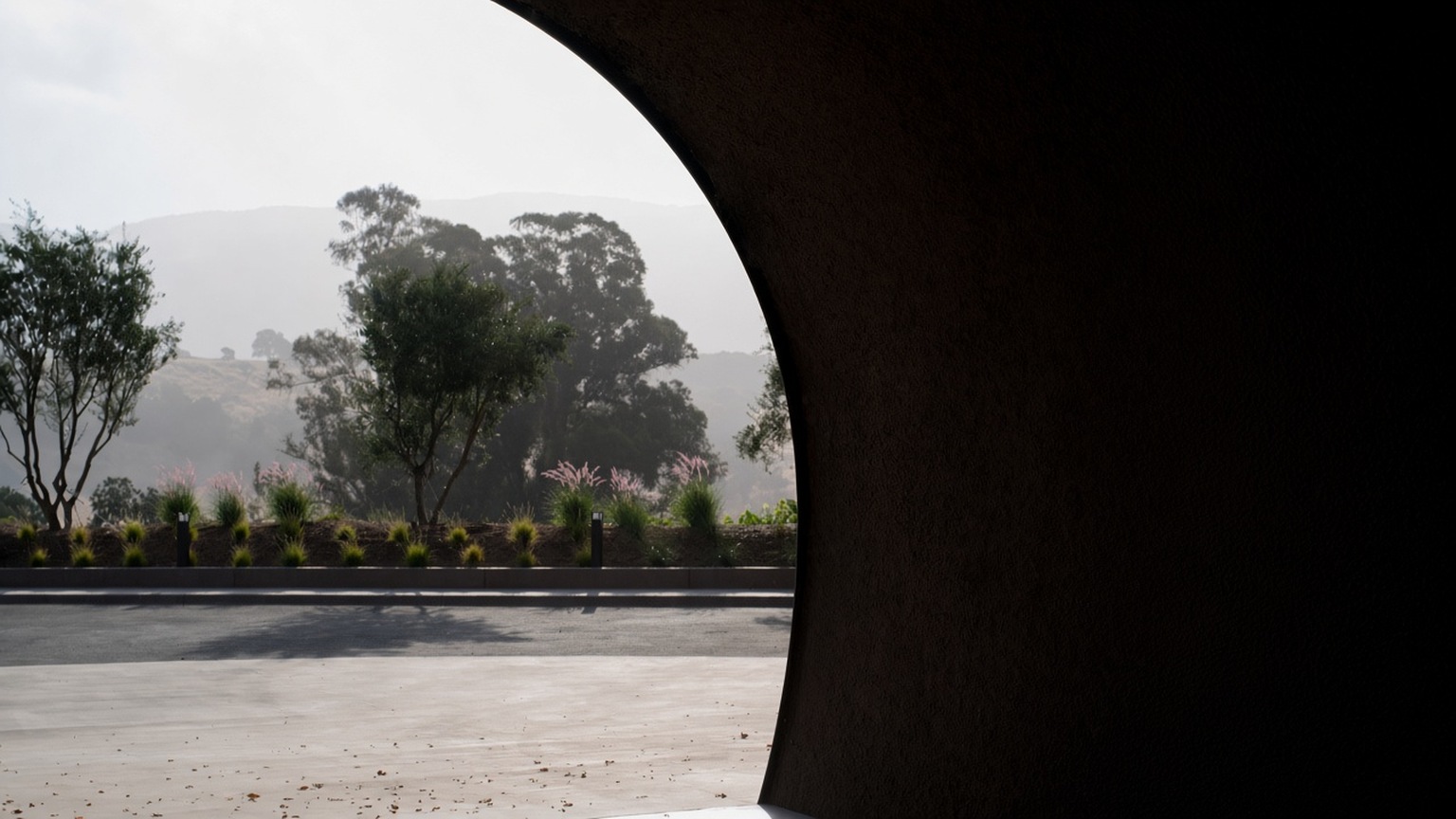
The winery sits underground between the vineyard and the oak grove, and from the ground you meet it as a dark arch. The hill stays the view. Covert is the name for that hiding, on the eastern side of the Vaca Mountains in Coombsville.
What does Cabernet Franc taste like when the cellar is buried between the vines and the oaks?
"The cellar is under the oaks. The glass is the franc."
The bottle is only $125. Add it.
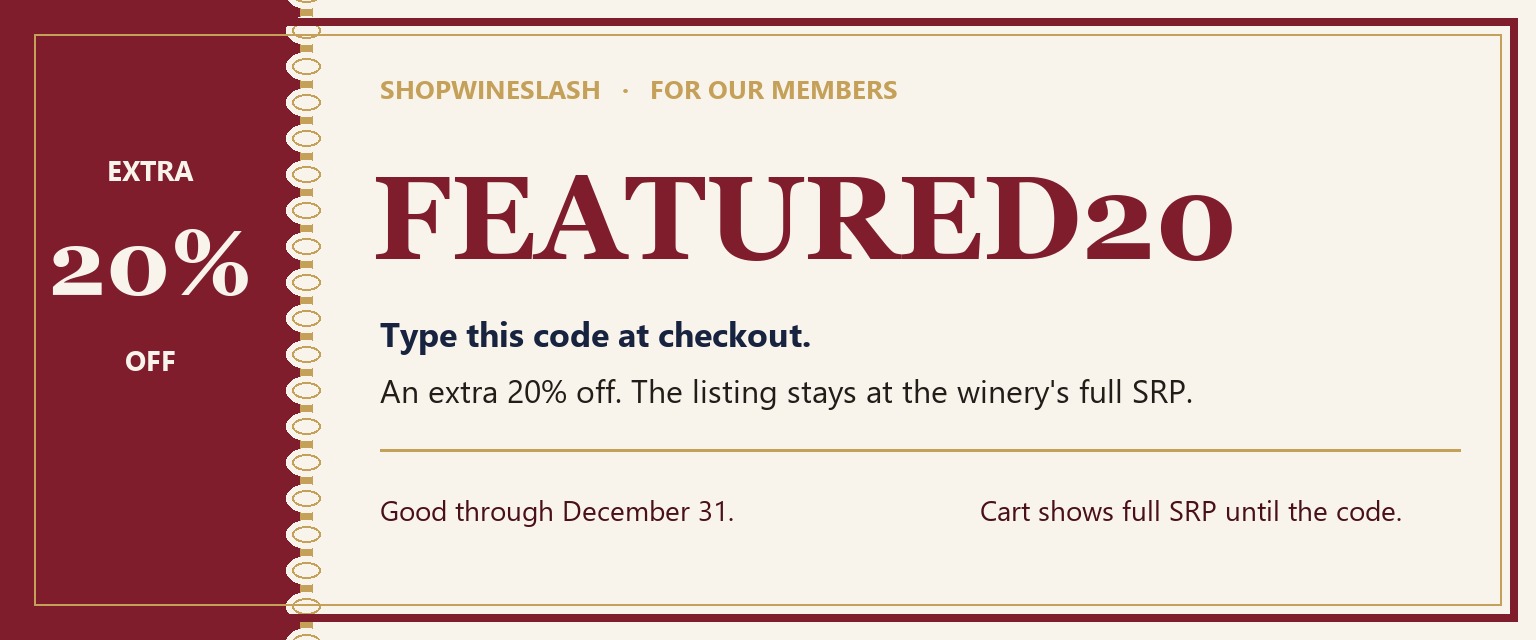
Type FEATURED20 at checkout through December 31. That is 20% off. The cart shows $125 until the code is entered.
Twelve bottles ship free in the lower 48. Hawaii and Alaska ship on the zone rate.
A mouth in the hill
The arch in the picture is the only door you see. Dark textured concrete fills the right side. Pale concrete runs out underfoot, with a few dry leaves, pink grasses, and oaks, and the hills go pale in the haze. The building itself stays under the ground. Napa Green is the standard on the property, and the footprint above the soil is kept small on purpose.
Cal and Pam Nicholson collect library wines and make wine in Napa. Dave and Laura Nestor collect. Julien Fayard makes this bottle. The three of them put the cellar between the vines and the oaks so the hill would stay the view.
What you walk out toward is the vineyard. The slope is the next thing the wine has to explain.
Ash, cobbles, and bay fog
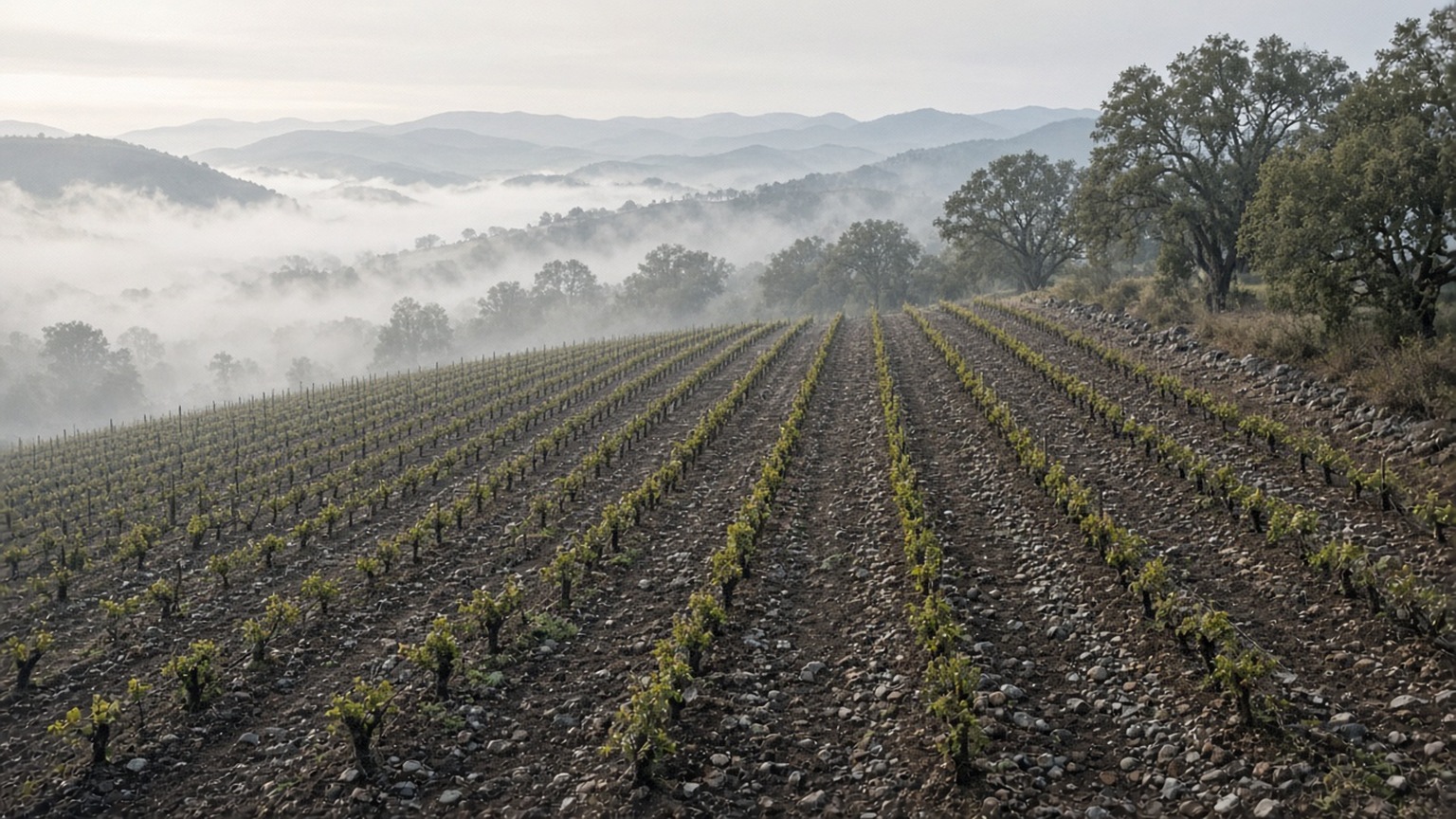
The rows sit on a gentle southeast-facing slope. Volcanic ash from Mt. George is the ground, with almost no topsoil, and cobblestone loam packed between the rock. The slope drains, and the ash still holds water.
Fog off San Pablo Bay can leave this hill as much as ten degrees cooler in the hot months. Budbreak comes early. Harvest comes later. The ripening stays long and slow, which is how a franc from this slope keeps its line.
The picture is that morning. Young vine rows run over rocky ground into a valley of fog, and large oaks stand on the right. The fruit is farmed organic, in tight rows, and picked by hand in the cool of the early morning. Two sorts follow, first the whole clusters, then the berries. What leaves the slope is what goes underground.
Bordeaux practice, then this franc
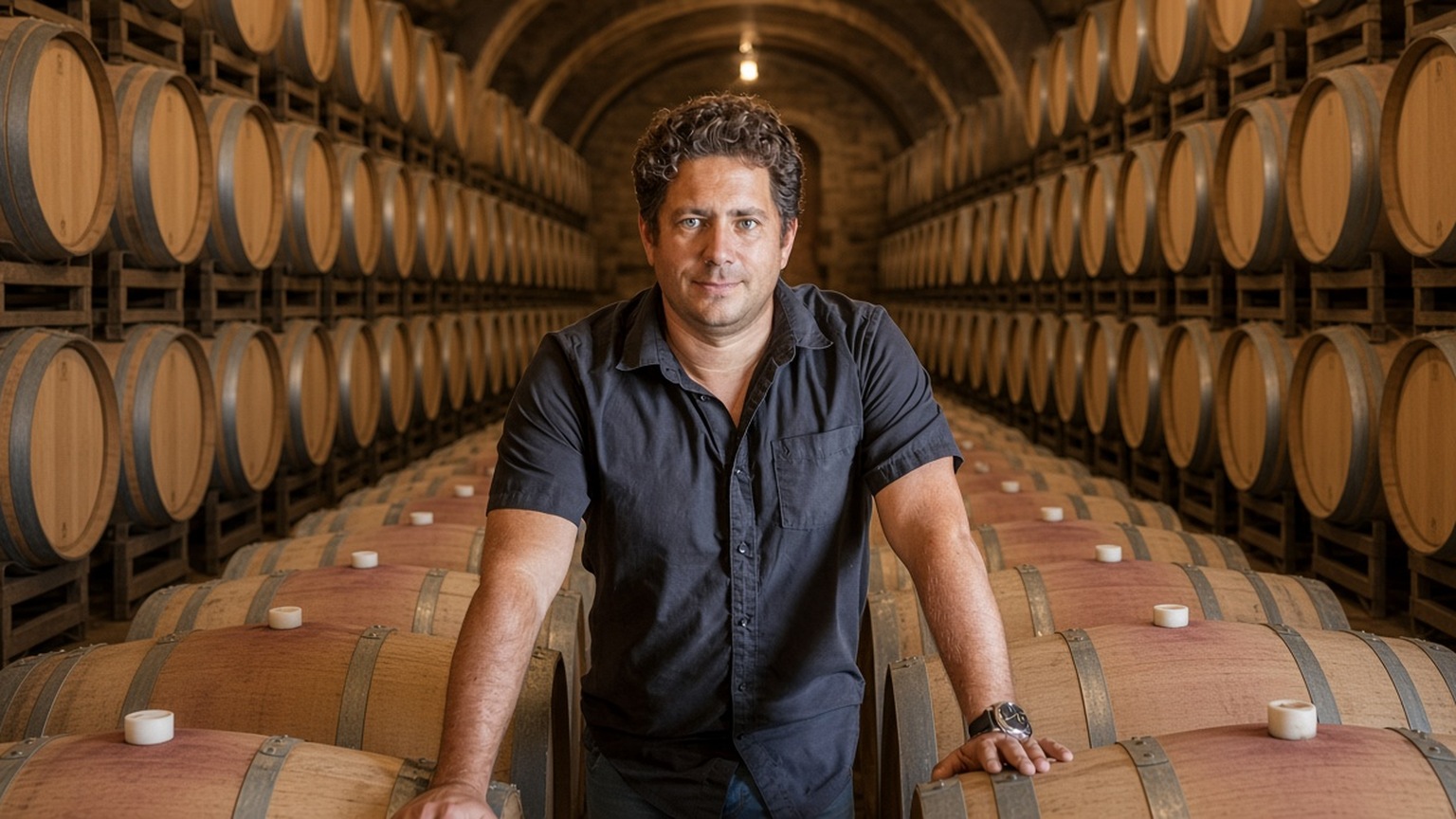
Julien Fayard was born in Saint-Etienne and raised on the French Riviera. He started at 16 in the family cellar at Chateau Sainte Marguerite in Provence, then worked at Chateau Lafite Rothschild and at Chateau Smith Haut Lafitte. He holds a master's from Universite Paul Sabatier, an agricultural engineering degree from ESA Angers, and an MBA from UC Davis. He has been in Napa since 2006, including time beside Philippe Melka, and he carries that Bordeaux cellar practice into this hill.
He is the man in the barrel aisle, black shirt, silver watch, both hands on the wood, white bungs on the barrels in front of him. This wine is 100% Cabernet Franc, clones 214 and 327. The fruit takes a cold maceration, then wild yeast under temperature control for 3 to 4 weeks. A vertical press sends it straight into barrel for the malolactic. The house keeps lots in barrel for 18 to 26 months as each one needs. This franc spent 18 to 24 months in new French oak, was racked at most twice a year, and was bottled without fining or filtration.
2021 was a drought year with uneventful weather and a small crop of intense fruit. Fayard has described the 2021s as carrying an intensity and a dynamism that set them apart, the season packed into tiny berries with an outsized personality. The estate made 200 cases of this franc. Blue fruit comes first, then loamy earth, ground coffee, and baking spice. The mouth turns to plum and blueberry, with kola nut, violet, and mocha, on a lithe slippery texture, and the finish stays spicy for a long time. Alcohol is 14.4%. Decant it for 2 hours or more, and pour it at 55 to 60 degrees.
Blackberry, then pepper
Pour the franc after those two hours, while it is still at 55 to 60 degrees. The blue fruit wants a dark sauce. The coffee and the baking spice want a crust.
Crisp duck with blackberry takes the fruit in the glass and gives it a purple sauce. A pepper-crusted flank steak takes the spice, and the lithe texture stays with the meat. The estate does not name these plates. They are the match for this glass.
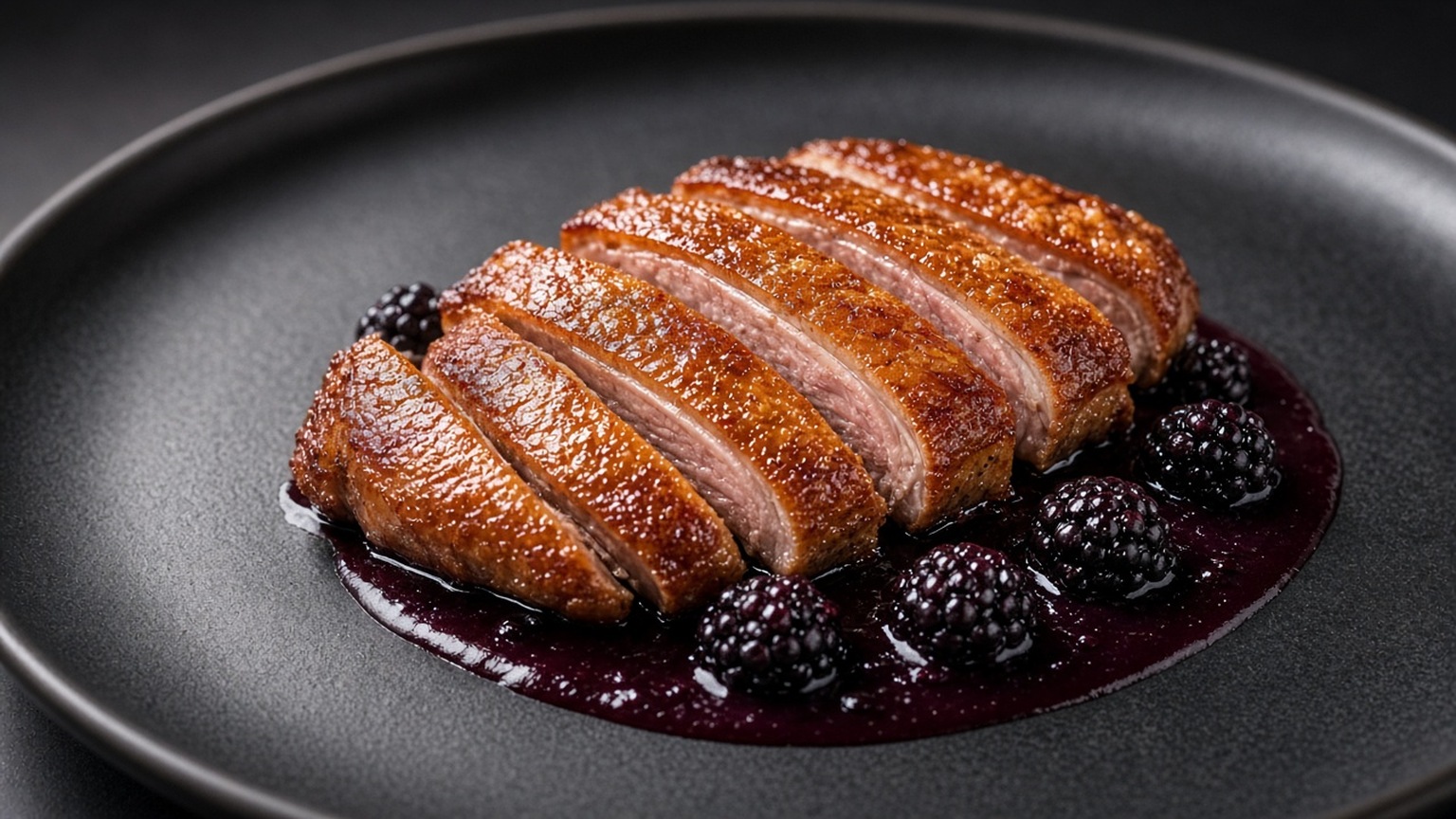
Duck with blackberry
Fanned duck breast, crisp skin, in a blackberry sauce with whole berries.
Why it works: The blue fruit in the glass meets the dark sauce.
View Recipe for Duck with blackberry (opens in a new tab)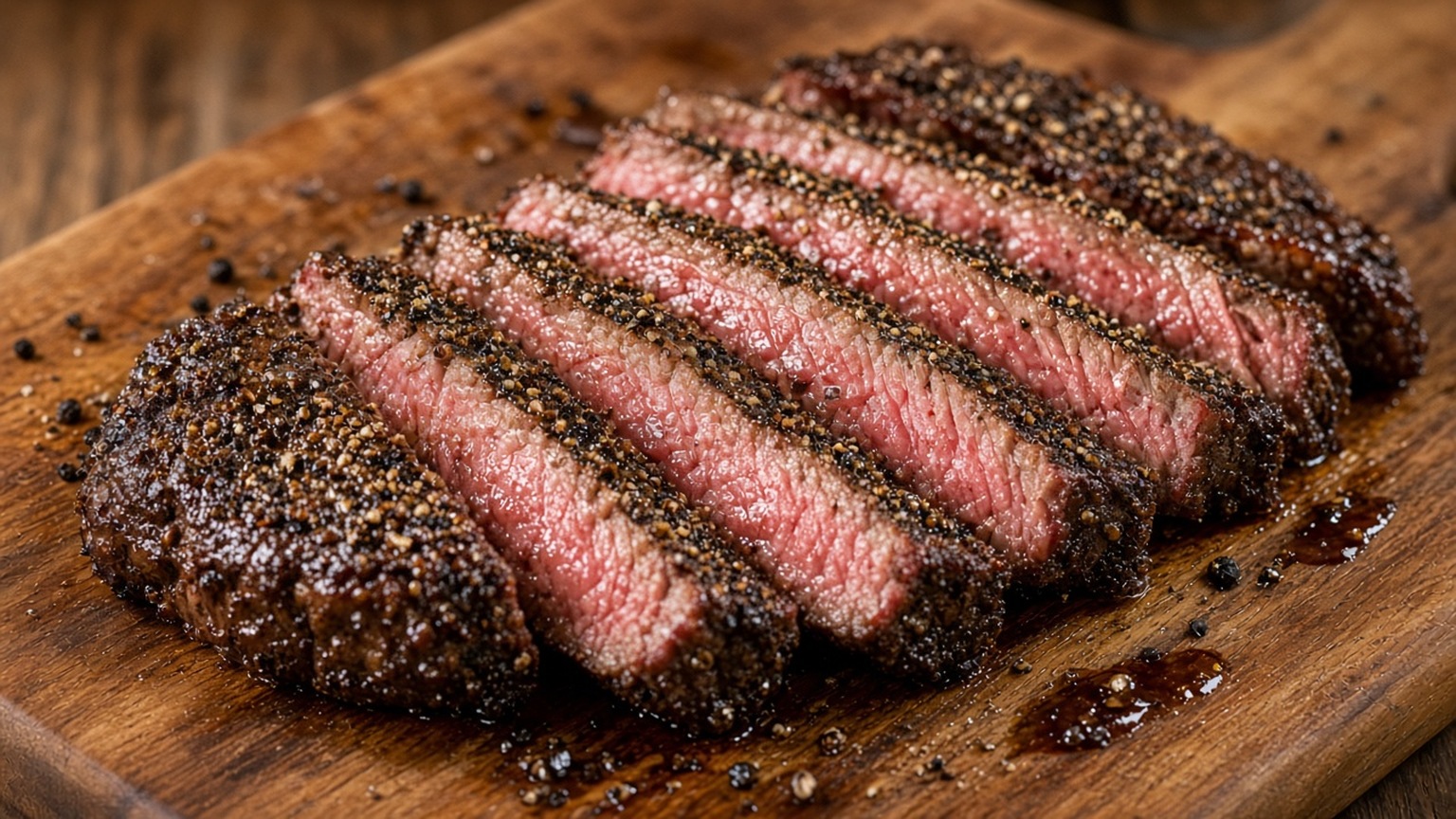
Pepper-crusted flank steak
Flank steak sliced, coarse pepper on the crust, rosy at the center.
Why it works: Ground coffee and baking spice in the glass meet the pepper crust.
View Recipe for Pepper-crusted flank steak (opens in a new tab)Take the bottle home.
The cellar is under the oaks. The glass is the franc.
Cabernet Franc from a cellar buried between the vines and the oaks, 18 to 24 months in new French oak. The winery price is $300. The bottle is only $125. Add it.

