

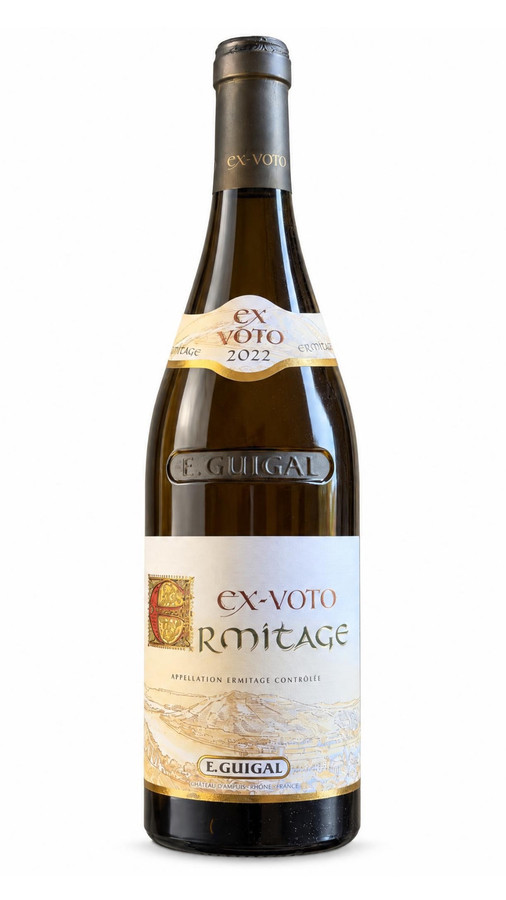
2022 E. Guigal Ermitage Ex-Voto Blanc, Hermitage, France
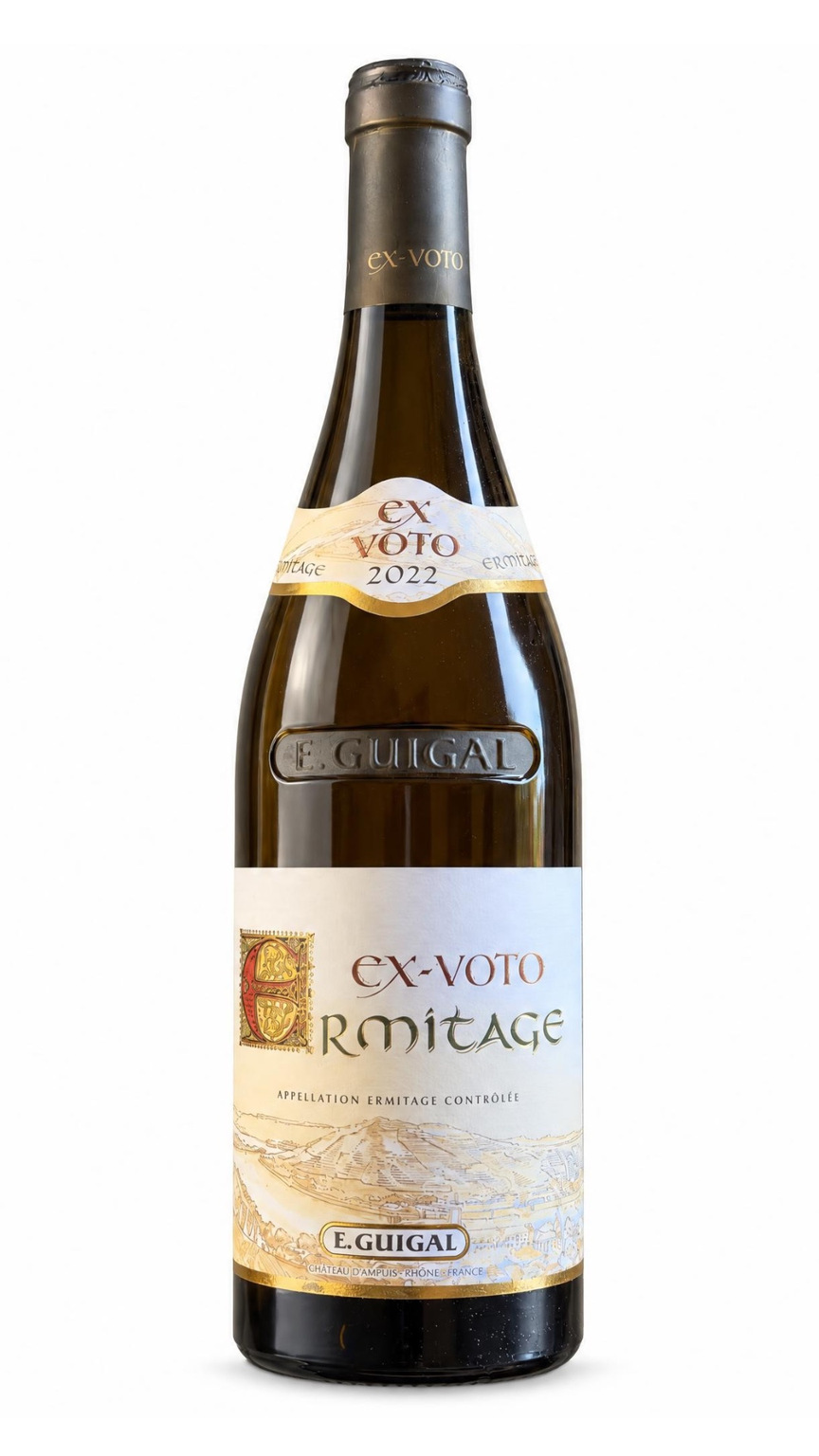

Wine-Searcher lists E. Guigal Ermitage Ex-Voto Blanc among United States retailers.
98 Wine Review Online • 97 Wine Advocate • 95 James Suckling
2022 E. Guigal Ermitage Ex-Voto Blanc, Hermitage, France
Wine Review Online scored this 2022 Ex-Voto Blanc 98 points, Wine Advocate scored it 97 points, and James Suckling scored it 95 points!
Michael Apstein, for Wine Review Online, found exotic aromas that stay composed, then depth and weight without heaviness, and a waxy texture. The 30 months in new oak sit in the wine without showing as oak.
Wine Advocate scored this 2022 in November 2025 and sets the drink window at 2035 to 2057.
James Suckling tasted it in April 2025, young and already concentrated, firm, and alive. Toast and vanilla oak are there, and the oak tannins are settling in. Cream and stony minerality carry a long finish. Drink it or hold it.
Etienne Guigal founded the house at Ampuis in 1946. Marcel carried the work forward, and in 2000 the family took vineyard land on the hill of Hermitage from the de Vallouit and J.L. Grippat domaines. Ex-Voto Blanc is the white from two of those parcels, and the house makes it only in the years the wine itself is exceptional. The name is a vow left on that hill.
What does a vow left on Hermitage taste like from vines that average 80 years?
"The vow is on the hill. The glass is the white."
The bottle is only $125. Add it.
Twelve bottles ship free in the lower 48. Hawaii and Alaska ship on the zone rate.
Philippe Guigal on Ermitage Ex-Voto Blanc, the 2009, from the VINTUS film. He presents the wine. It is not the winery's own channel, and it is not a tasting of this bottle.
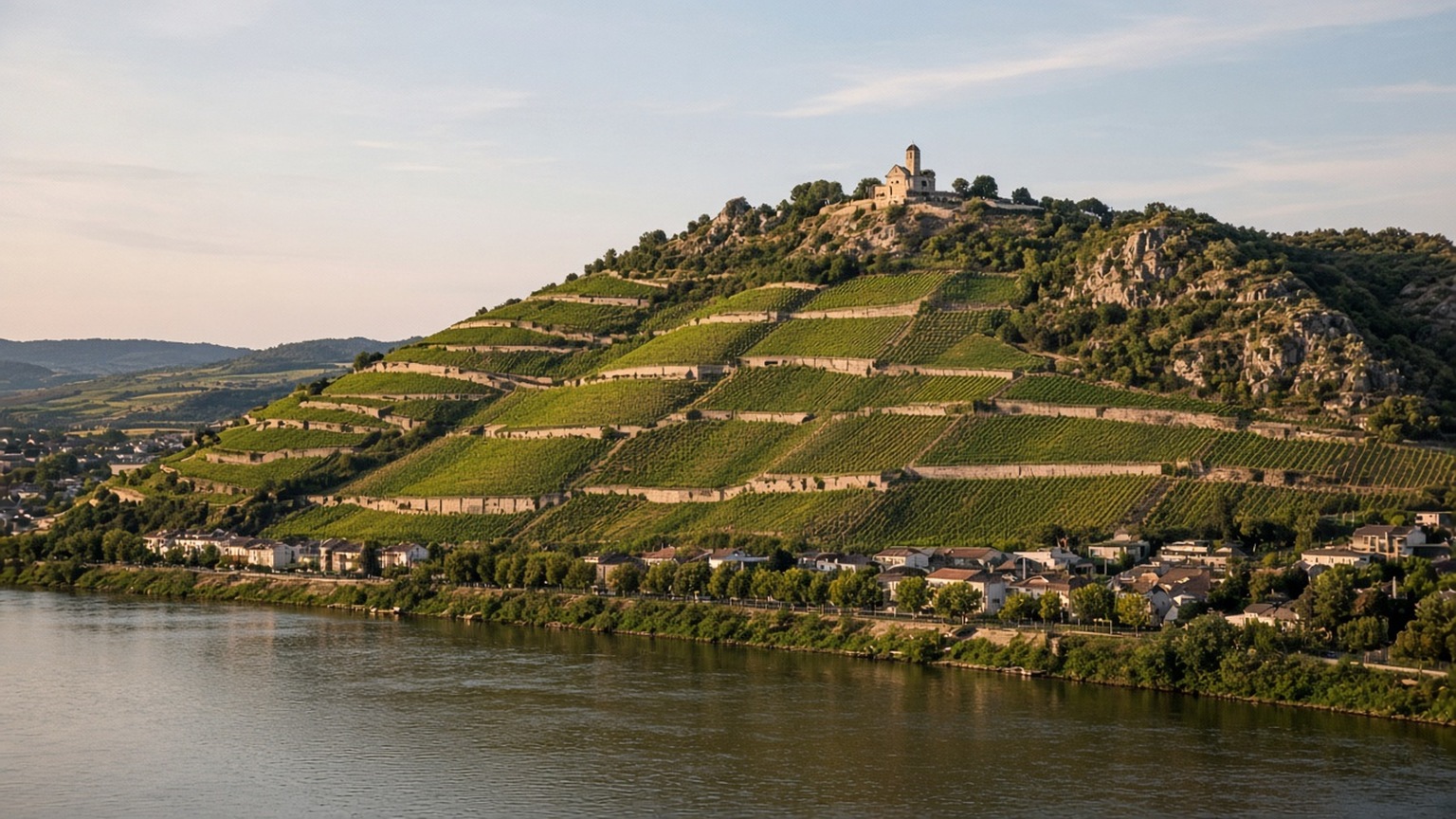
The hill above the river
The hill in the photograph rises in stacked terraces above a wide river, a town along the bank and a chapel on the crest. That is the shape of Hermitage, and it is where this vow was set. Les Murets is 1.6 hectares of fluvio-glacial alluvium and stones, and it is 90% of the wine. L'Hermite is 0.2 hectares of loess and sandy-clay silt, and it is the other 10%.
The vines on those two parcels average 80 years. The estate publishes a yield of 39 hectoliters a hectare. The white is made only in exceptional vintages, and the sheet gives it about 15 years in the cellar.
The river fills the foreground of the picture, and the chapel tower is the mark on the crest. The bottle starts on that slope, before a single barrel is filled.
Walls, then the blend
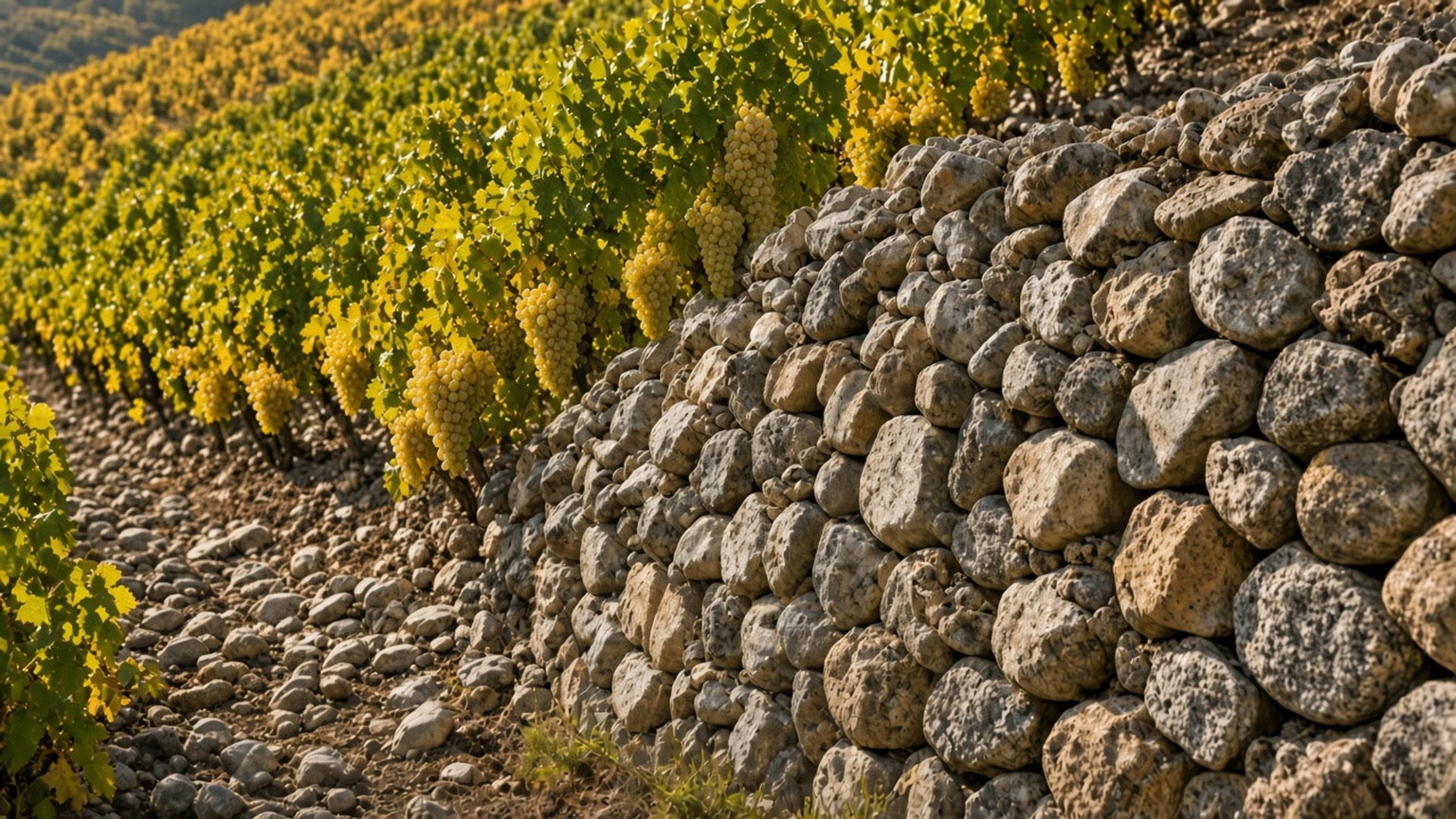
The larger parcel takes its name from the walls. The photograph is that stone, a curved pile of rounded rocks with pale gold clusters hanging on the yellow leaves. The alluvium the sheet describes is the ground under those rows.
The blend is 90% Marsanne and 10% Roussanne. Marsanne carries the body. Roussanne is the smaller voice in the same glass. The house does not make this white as a copy of the red Ex-Voto, and the red parcels stay off this bottle.
Those pale clusters are the fruit that will sit in new oak. The stones stay on the hill. The wine is what leaves.
New oak, then a year in bottle
The fruit is vinified only in new oak casks, with the temperature held, and the malolactic fermentation runs all the way through. It then stays 30 months in new oak barrels and one more year in bottle before it leaves the house.
The glass the estate describes is a brilliant clear straw yellow. White flowers, hawthorn, and acacia honey lead the nose. The mouth is rich and unctuous, and the density is the hill showing up in the wine.
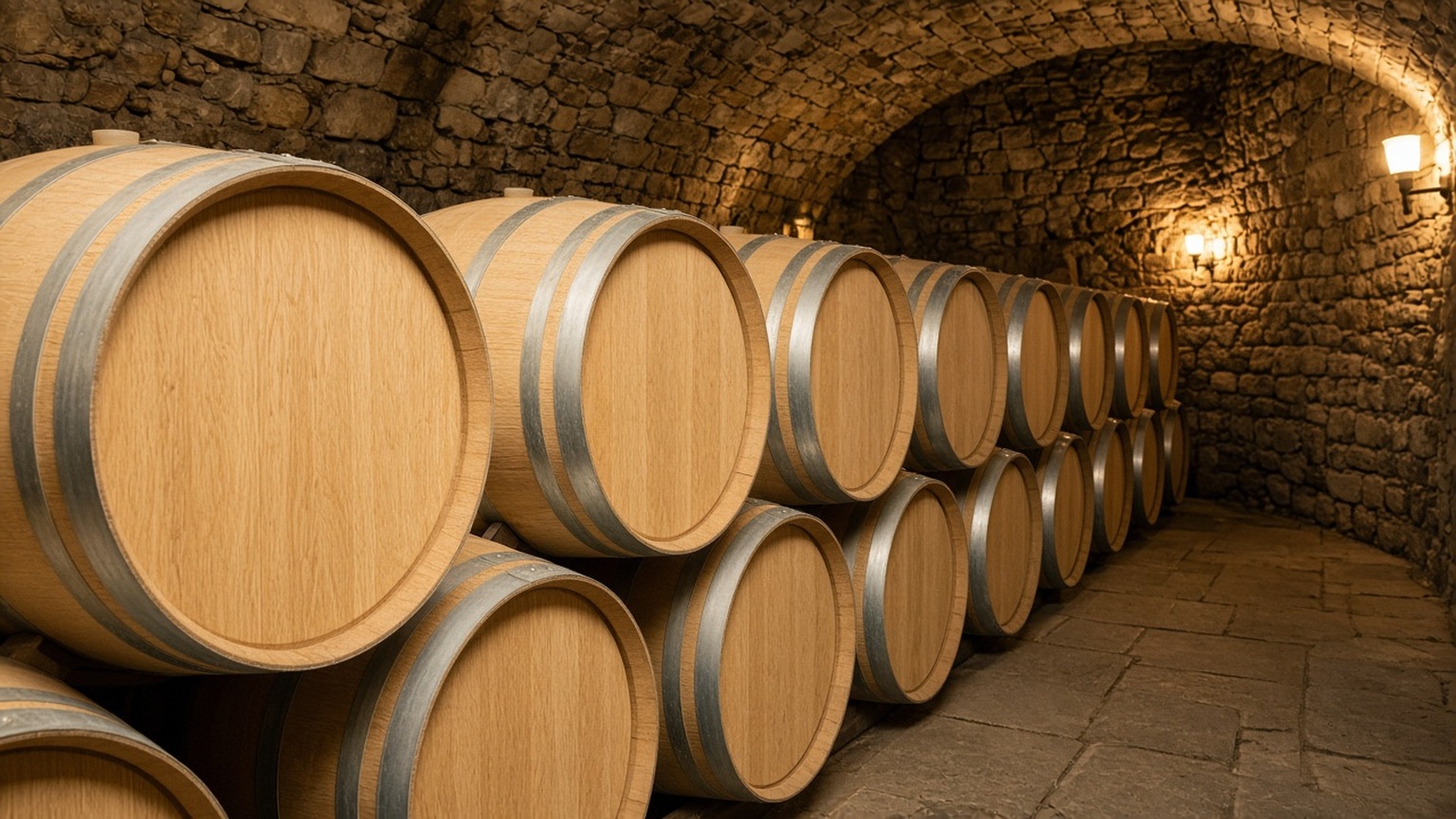
The cellar photograph is that new wood. Pale barrels with silver hoops stand two high under a brick arch, and a lamp is lit on the right-hand wall. The 30 months happen in barrels like these.
Lobster, then veal
The estate sends this white to lobster thermidor and to a fillet of veal with morels. The hawthorn and the acacia honey meet the browned cream of the lobster. The density of the hill meets the veal and the morels.
Serve the bottle at 10 to 12 degrees, while the lobster is still hot from the broiler and the morels are still in their sauce. The straw gold in the glass wants both plates.
Lobster thermidor
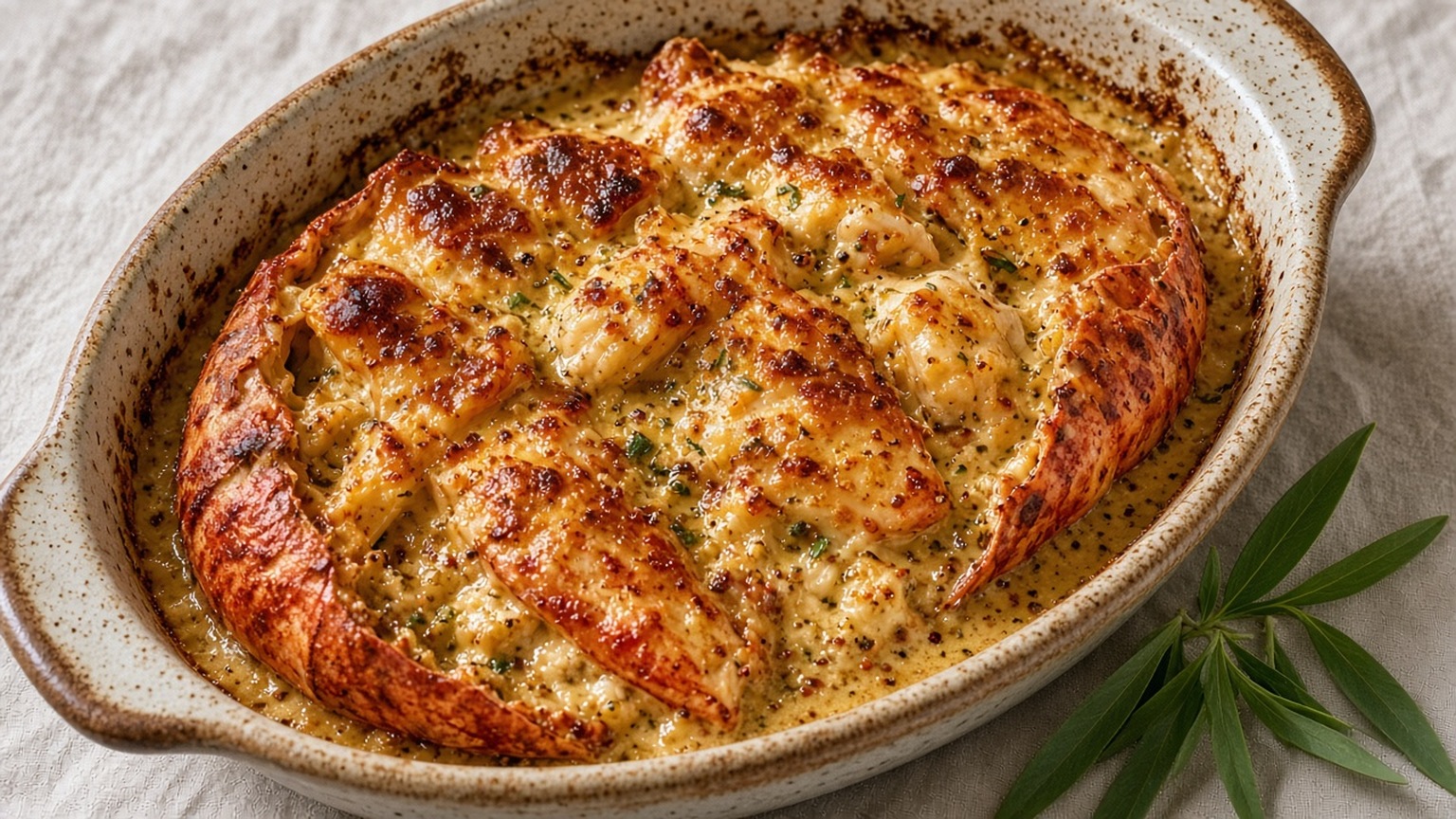
Lobster in a browned cream, finished under the broiler, with tarragon at the side.
Why it works: Hawthorn and acacia honey meet the browned cream.
View Recipe for Lobster thermidor (opens in a new tab)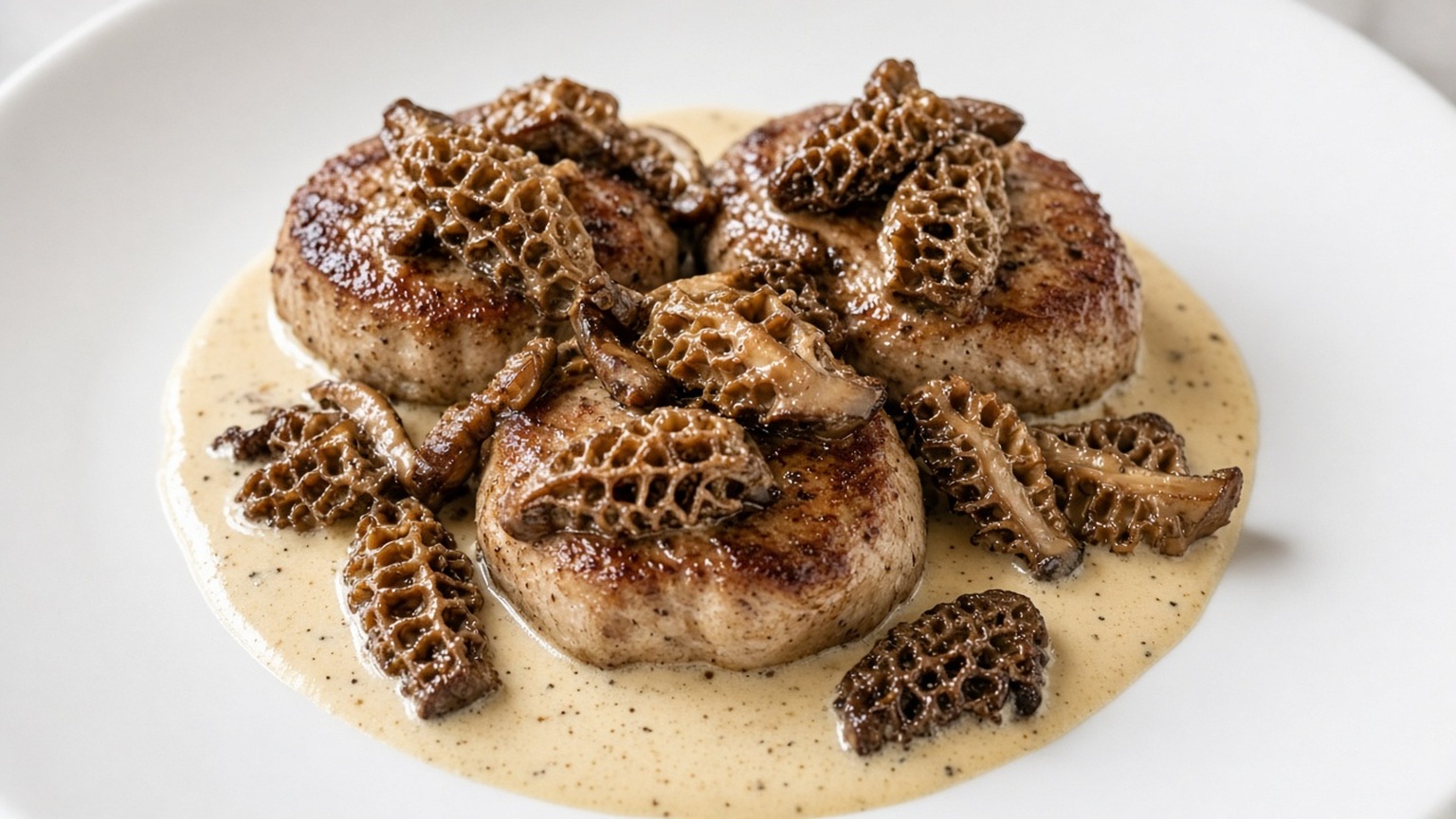
Veal with morels
Seared medallions in a cream sauce, with honeycomb morels over the meat.
Why it works: The density of the hill wants the veal and the morels.
View Recipe for Veal with morels (opens in a new tab)Take the bottle home.
The vow is on the hill. The glass is the white.
Two parcels on the hill of Hermitage, Marsanne and Roussanne, thirty months in new oak. The bottle is only $125. Add it.
